Oaks & Watersheds: Partnerships & Alliances
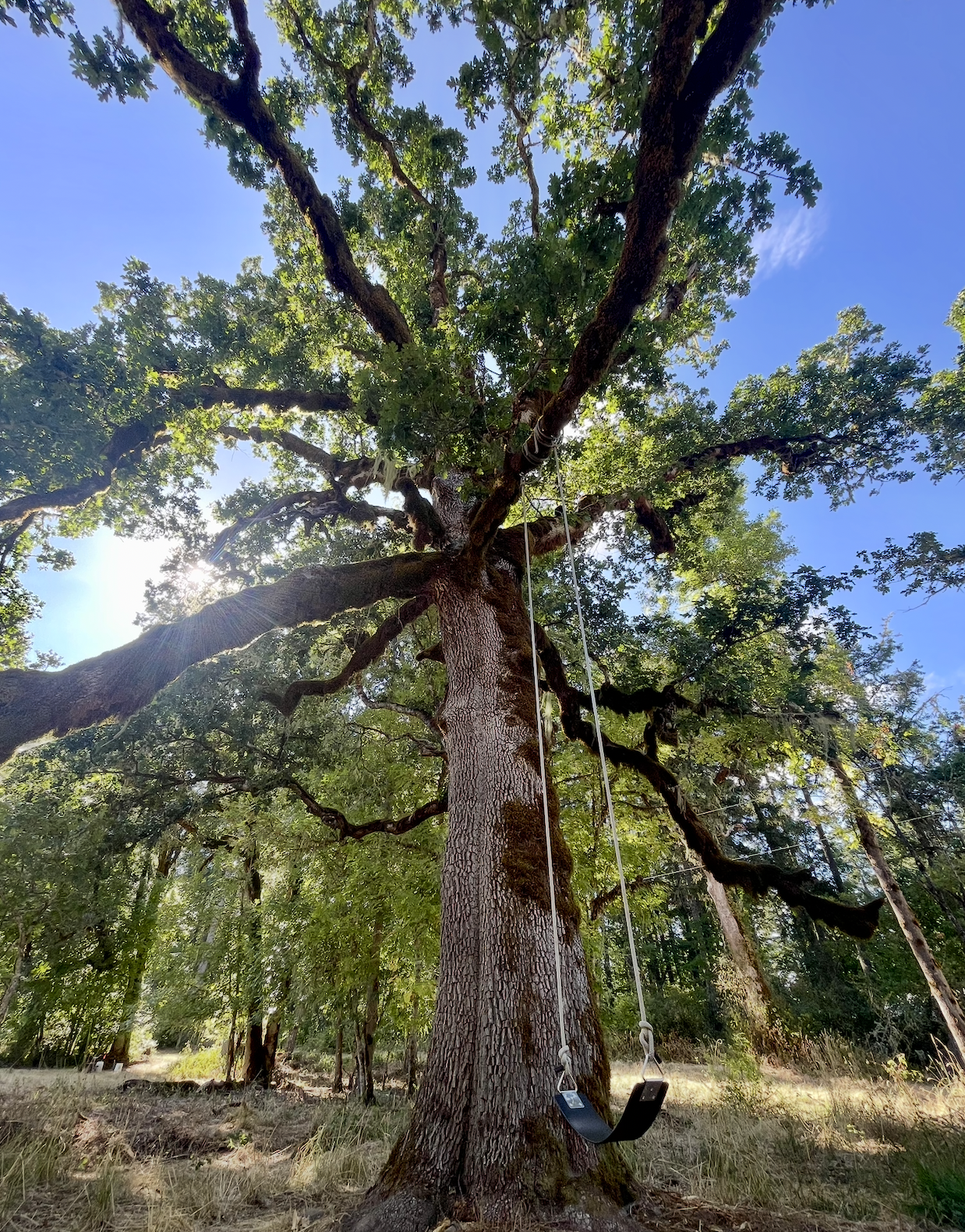
Oak Tree at Lost Valley
Dear Friends & Family of Lost Valley,
We are excited to share with you the latest updates on some of our key partnerships! In this edition, we're highlighting natural alliances and current collaborations in service to the restoration of local and bioregional relationships, both in the human and non-human worlds.
Take it from the Oak: relationships are the foundation of all life-sustaining systems. The more symbiotic relationships that exist within an ecosystem, the more biodiversity, syntropy, and life in abundance!
A keystone species, one single oak tree can sustain over 200 different species of birds, reptiles, mammals, and invertebrates with food and nesting habitat. Oaks also increase native insect and plant diversity, and adapt more readily to extreme temperature fluctuations in climate. It is for this that the beautiful and resilient Oak tree is a primary teacher, elder, and model for what we work, stand, and strive for at Lost Valley.
Together with other organizations, non-profits, watershed councils, families and friends in the Willamette Valley and greater Cascadia bioregion, we offer our space and resources in service to thriving ecosystems of human relationship and regenerative efforts. We hope this small report sparks and feeds the seeds of inspiration and service already alive in your heart!
Highlighted in this newsletter:
OAK WOODLAND HABITAT RESTORATION GRANT
WILLAMETTE VALLEY LISTENING TOUR with regenerate cascadia
In Partnership with the Upper Willamette Soil and Water Conservation District (UWSWCD) and Middle Fork Willamette Watershed Council
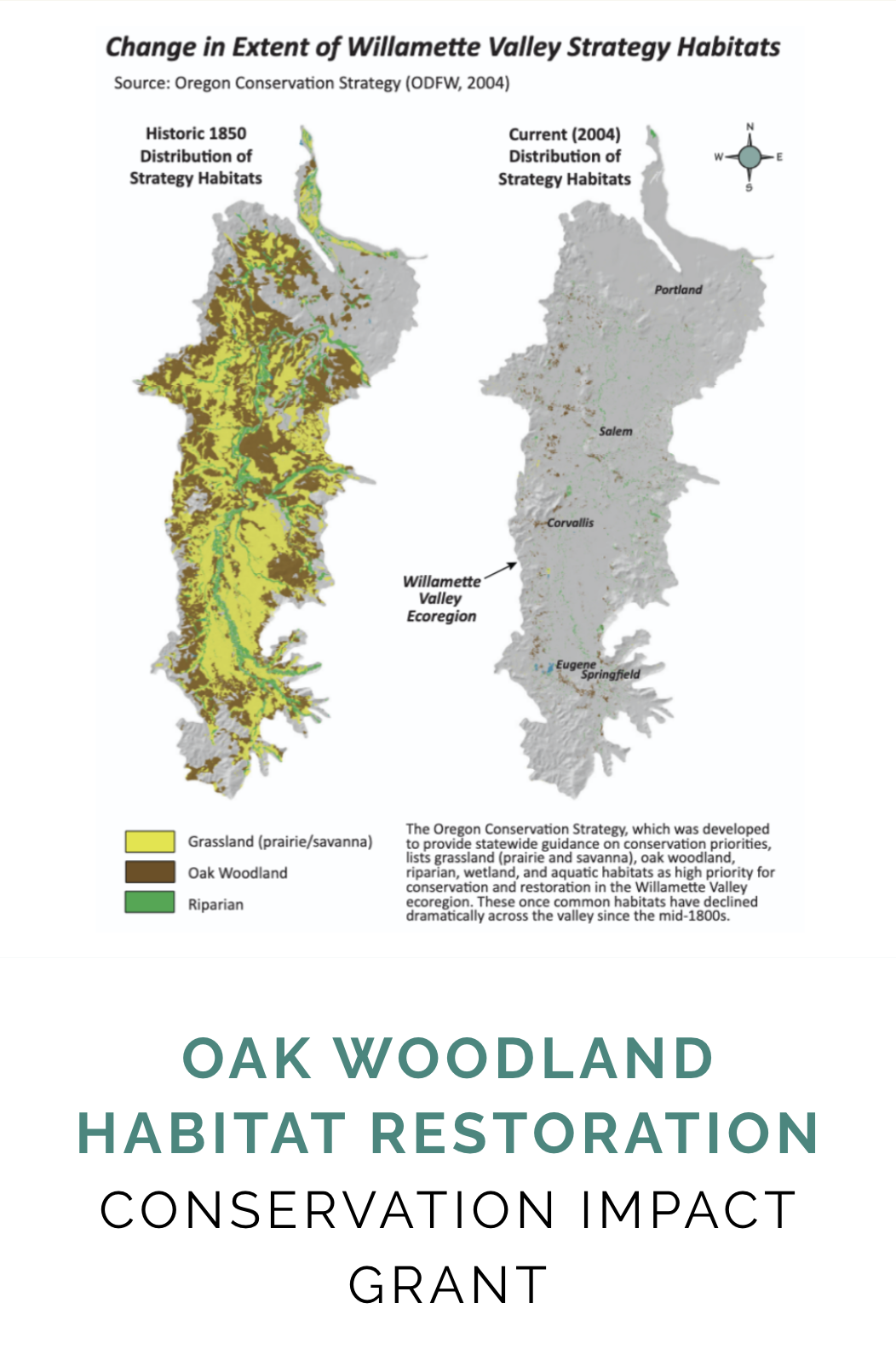
This spring, Lost Valley Education Center was awarded the Conservation Impact Grant to deepen our alliance and commitment to the oak as a symbol and progenitor of ecological balance and biodiversity on our land. This grant will fund our internal land stewardship team to perform invasive understory management in collaboration with the Northwest Youth Corps, and hire a restoration contractor (TBD) to thin around our beautiful legacy oaks! Later, Lost Valley will reseed native species to support continued regeneration.
This work supports critical native habitats and endangered species in our bioregion. As seen in the image above, oak habitats have been reduced by over 95% in the Willamette Valley since the mid-1800s when settler colonialism arrived. Oaks were cleared for homesteads and pasture lands, and fast-growing conifers were planted for timber. Indigenous fire or cultural burning, used since time immemorial to tend these vast landscapes, was thoroughly suppressed. Continued development and exploitative industries continue to pose a significant threat, and much of the remaining oak woodlands are now in private ownership. This is why organizations such as the UWSWCD and Middle Fork Willamette Watershed Council are stepping up and working across the lines of property and ideology to fund oak restoration, offer youth education, and create more meaningful jobs in conservation.
In deepening our relationship to our local watershed councils as well as to the land, water, and fire, the organism of Lost Valley continues to grow into its role within local and regional climates of human organization and shifting paradigms of thought. At the confluence of Western scientific knowledge, guidance from Indigenous elders and teachers, and community-based initiatives, we offer opportunities for both hands-on ecologically regenerative action as well as co-creative cultural renewal. Come and learn with us!
Do you steward oaks on your land? YOU could be the next grant recipient!
Visit our partners for more information:
Upper Willamette Soil and Water Conservation District (UWSWCD)
Middle Fork Willamette Watershed Council
Extras:
Listen to Virginia Pritchard (MFWWC) talk about Oak restoration at Lost Valley here!
Written Guide: Conserving Oak Habitat in the Southern Willamette Valley
Think global, act local and bioregional –
The Willamette valley listening tour launches in Lane County!
The fertility of this valley applies not only to the food we grow, but to the rich landscape of innovative projects, communities, and organizations that call her small green byways, waterways, and hills home. Through the work of volunteers, community organizers, and cultural weavers such as the team at Regenerate Cascadia, these different groups and projects are being invited to go beyond silo mentality and enter into the spirit of collaboration, communication, and mutual upraising.
We are thrilled to support this dedicated team in kicking off their Willamette Valley Listening Tour this September with an opening ceremony at Lost Valley! Over the course of two weeks, they will follow the path of the river from the head waters of the Mackenzie, through larger and larger confluences, to the great Columbia River– life stream of the Cascadia bioregion. They will listen deeply to the story of this Valley in the land, the water, the hearts of its people. From panel discussions in water and forest management, cooperative community development in housing and food sovereignty, and education programs, to service work and ceremony at natural sites, this tour seeks to integrate a diversity of perspectives and inter-disciplinary, place-based solutions.
Building on-the-ground relationships is integral for creating strong bridges of trust and mutual benefit between folks doing regenerative work in the Valley and beyond. We urge you to remember that this tour has been organized through volunteer labor – please consider supporting this work by donating to this GoFundMe campaign.
For tour updates or to attend one of the public events along the way, you can email swv@regeneratecascadia.org
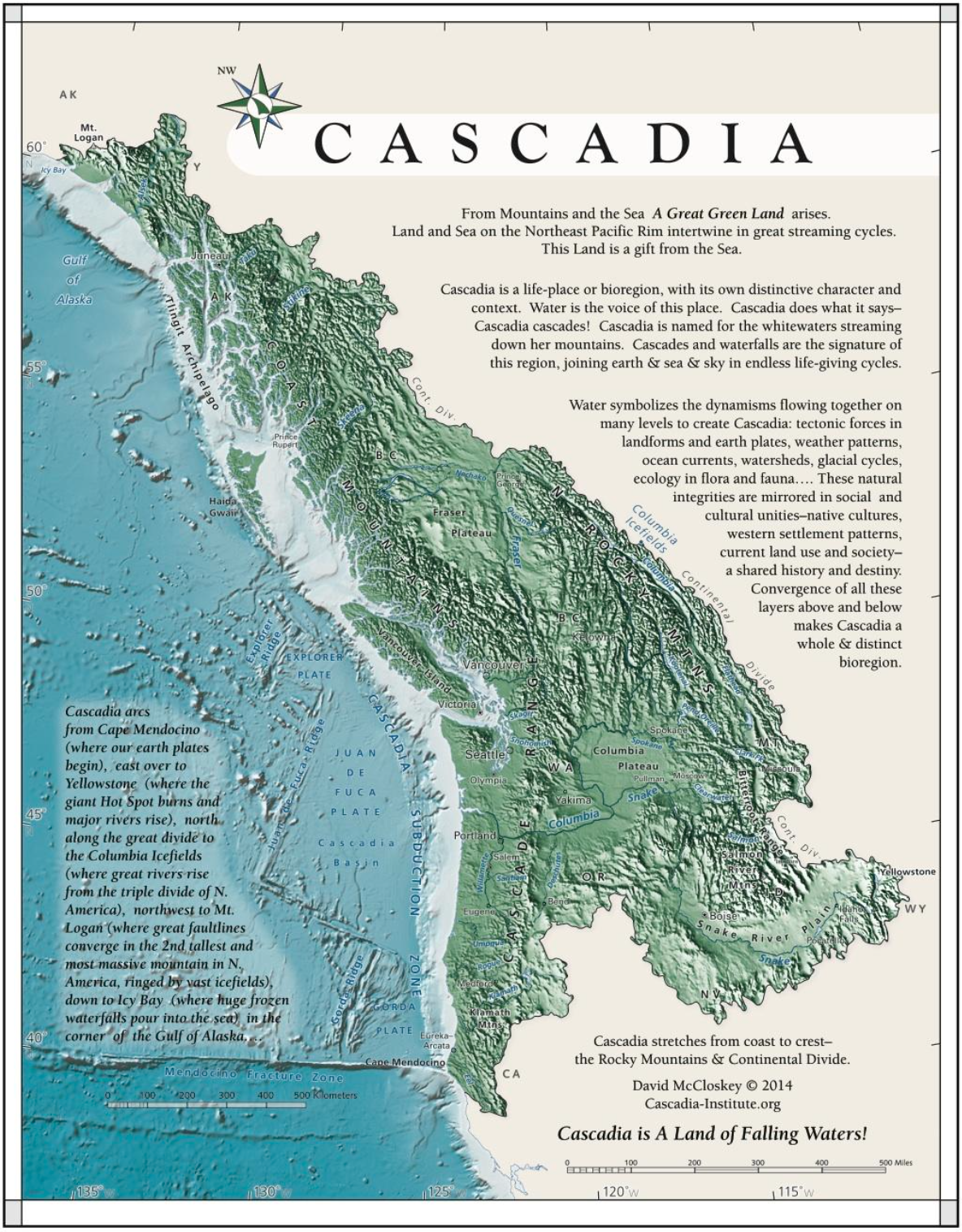
Map of the Cascadia Bioregion
Do you have a workshop, event, or course to offer?
We welcome further opportunities for cross-pollination, collaboration, syntropy and symbiosis! Our spaces and facilities are available for rent to aligned visions – we encourage you to reach out with your proposals in service to cultural and ecological regeneration!
Contact businessadministrator@lostvalley.org for more information.
Don't forget to check our website as well for regular opportunities to drop in for free in our Community Resilience Workshops!
Thanks for reading, see you soon!