Community Experience Week
October 18-24 2026
Learning from the oaks:Community, Resilience, & Reciprocity
A special edition of CEW exploring what ancient oak ecosystems can teach us about how to live together.
What is the
experience?
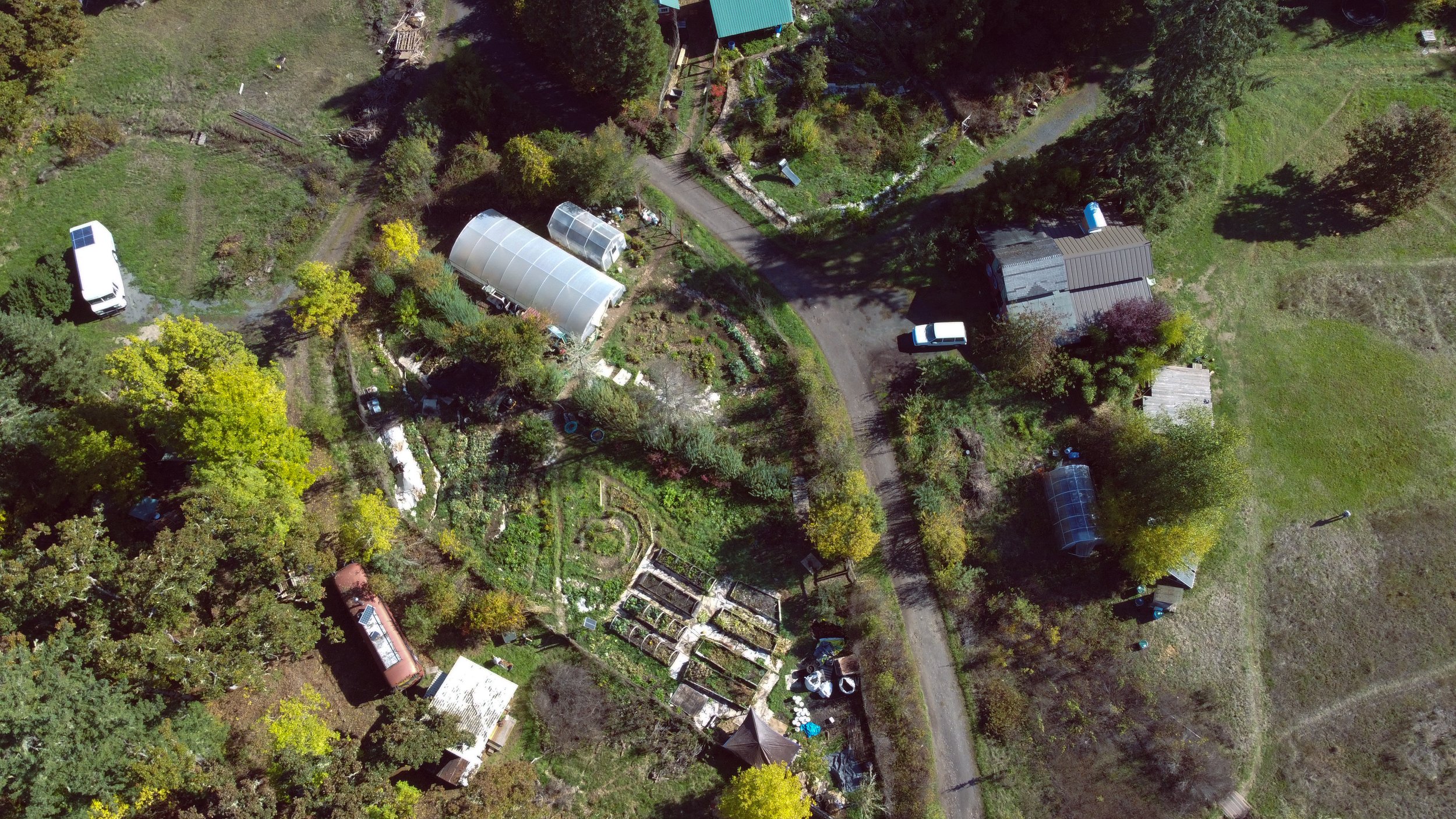
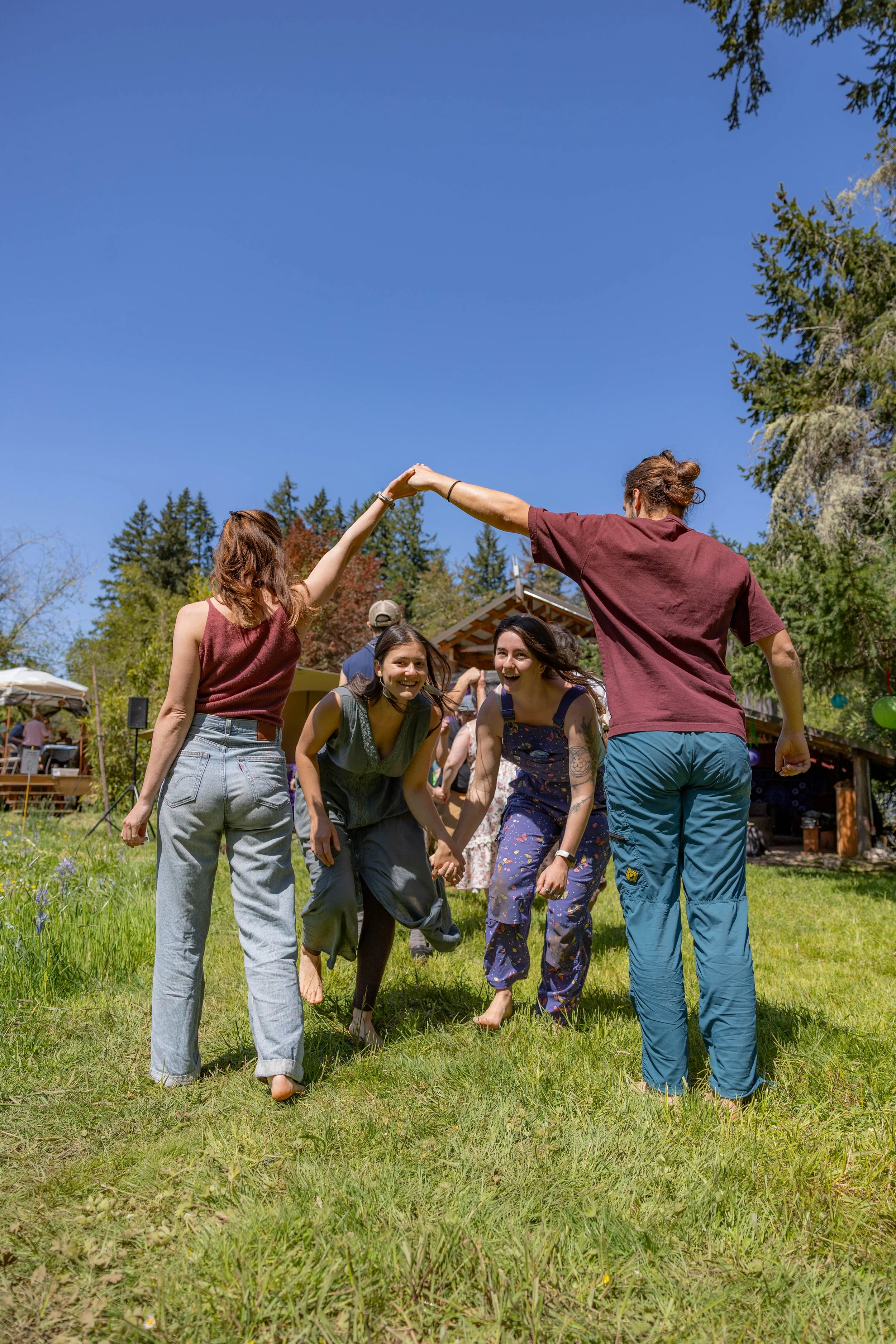
Lost Valley Education Center and Meadowsong Ecovillage has been hosting a series of Community Experience Weeks for people curious about intentional community and interested in developing the skills, values, and practices that help us build healthy relationships with one another. Participants receive 19+ hours of in-person instruction and guided activities with community residents, along with opportunities for connection, reflection, and exploration across our beautiful 87-acre property.
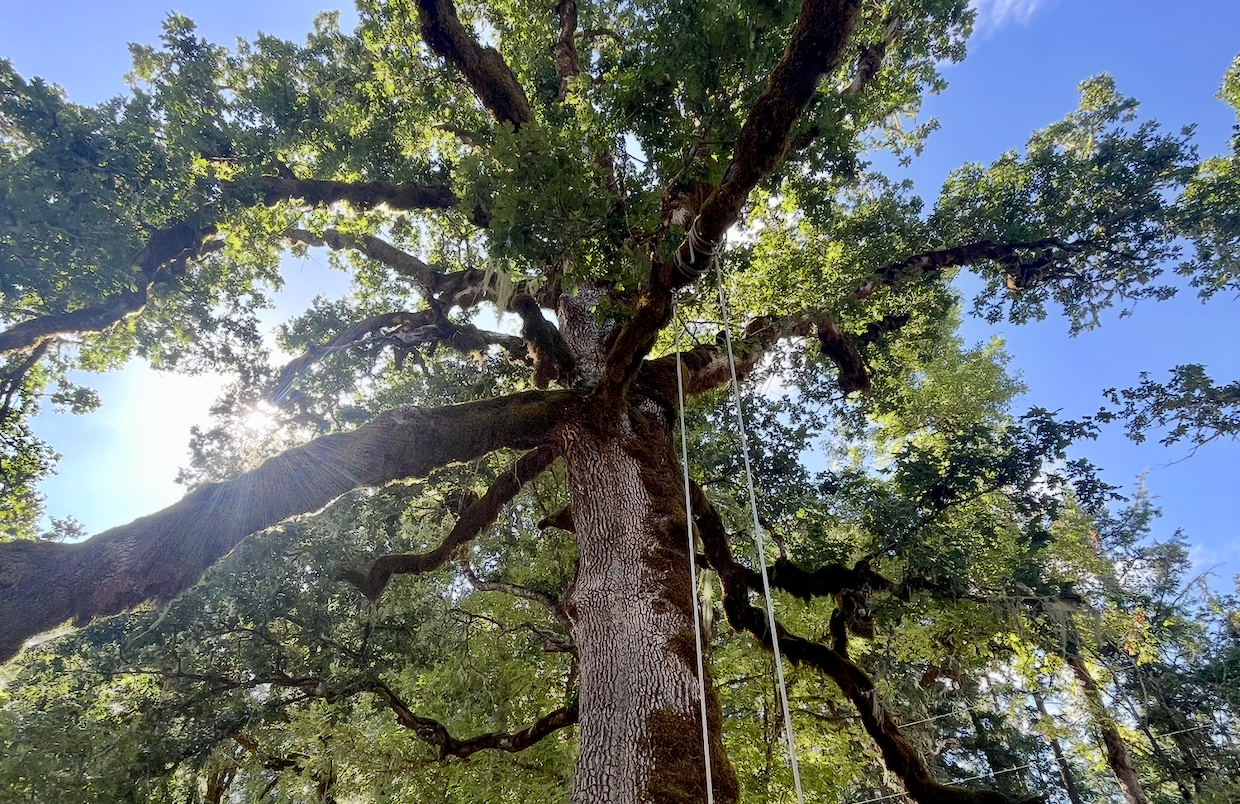
This special edition invites us to learn from the oak ecosystems around us. Oaks have been revered by human cultures around the world for thousands of years, providing food, shelter, materials, and habitat while teaching us about resilience, reciprocity, and interdependence. Using the elements of Fire, Earth, Water, Air, and Spirit as our guide, we'll explore what the oak can teach us about ourselves, our relationships, community, and our connection to the wider bioregion.
Come spend a week learning from the oaks, and discovering what they might teach us about being human together.
What You'll Take Away
Community Experience Week is an opportunity to experience community from the inside and develop practical tools for participating in it.
During the week, you'll have opportunities to:
Develop greater self-awareness and emotional intelligence
Practice Nonviolent Communication
Explore healthy boundaries and reciprocity
Learn tools for navigating conflict
Understand Permaculture as a social framework
Experience Sociocracy and participatory governance
Explore bioregionalism and regenerative culture
Develop a deeper relationship with the land and more-than-human world
Learn practical ecological and cultural skills
Ask difficult questions about what makes communities resilient, healthy, and regenerative
Connect with people experimenting with different ways of living together
Come curious. Come willing to participate. Come ready to notice what the oak has to teach you.
Sunday, DAY 1: Arrivals/ORIENTATION
Participants will receive a tour of our land, and review rules and expectations for the week. We will also go over the schedule, and get to know each other and the community.
Monday, DAY 2: Oaks & Fire
Resilience • Conflict • Transformation
Oaks in our climate are deeply adapted to fire. Fire can disrupt an ecosystem, but it can also create the conditions for renewal.
What if we approached conflict and disruption in a similar way?
Rather than asking how we can avoid every disruption, we can ask: How can we become more resilient and learn to move through cycles of change?
We'll explore conflict transformation, community resilience, and the role of the hearth and fire in creating community.
Possible experiences:
Biochar making • Oak fire ecology • Community conflict strategy games • Hearth traditions • Prescribed burn, if conditions permit
Tuesday, DAY 3: Oaks & Earth
Reciprocity • Boundaries • Mutual Aid
An oak gives generously; acorns, shade, habitat, food, shelter, and countless other gifts. But an oak ecosystem also requires tending. Oaks need space, light, disturbance, and stewardship to thrive.
How do we balance generosity with boundaries? How do we care for ourselves while contributing to something larger?
This day explores the movement from I → WE through reciprocity, mutual aid, boundaries, and our relationship with the land.
Possible experiences:
Acorn harvesting • Acorn processing • Oak stewardship • Reciprocity practices • Boundaries & mutual aid exercises
Wednesday, DAY 4: Oaks & Water
Relationship • Emotional Intelligence • Connection
Oaks are deeply relational species, connected to an extraordinary web of fungi, plants, animals, insects, and microorganisms.
Their lesson is simple: we do not thrive alone.
We'll explore what it takes to create deep and lasting relationships in community, including the introspective work required to participate in them. We'll touch on emotional intelligence, intimacy, grief, joy, and the practices that help relationships endure.
We'll also zoom outward, exploring the fractal nature of watersheds and the growing movement toward bioregional organizing and culture-making.
Possible experiences:
Oak gall ink • Relationship practices • Emotional intelligence • Watershed exploration • Bioregional organizing • Grief work
Thursday, DAY 5: Oaks & Air
Communication • Governance • Collective Vision
Oaks participate in complex networks of communication and exchange. Their branches host other organisms, their roots connect them to fungal networks, and their surrounding ecosystems provide signals about the health of the air and land.
What can we learn from these relationships about communicating clearly, navigating boundaries, making decisions, and turning collective vision into reality?
We'll explore NVC, Sociocracy, Permaculture, pattern language, and other tools for self-governance and collective action.
Possible experiences:
Communication practices • Sociocracy • Governance games • Permaculture principles • Pattern language • Collective visioning • Make usnea medicine
Friday, DAY 6: Oaks & Spirit
Integration • Ancestry • Celebration
What happens when we bring all of these lessons together?
Our final day is an opportunity to slow down, reflect, make art, tell stories, sing, and celebrate our relationship with the oak and the more-than-human world.
We'll explore the oak as an ancient cultural symbol and reflect on our own ancestral relationships with trees, land, food, fire, and community.
This is a day for remembering that we are part of something much larger than ourselves.
Possible experiences:
Art • Song • Storytelling • Reflection • Ritual • Celebration
Saturday, DAY 7: DEPARTURES
There will not be anything scheduled for this day. However, participants can have the option to stay an additional night to audit our Weekend Permaculture Design Course in the Spring and Fall. See here for more info
As a 501(c)3 environmental non-profit education center we are deeply committed to the work that we do! For decades, our stewards, staff and teachers have worked well below market rate and volunteered countless hours of community service, including organizing and hosting our education courses, to further our vision and mission of bringing us all into deeper relationship with one another and the more-than-human world. We are honored to support those with limited financial resources in accessing the unique educational opportunities we offer here at Lost Valley. As the economy shifts and our expenses increase, we are hopeful that those who have the means will help move our non-profit to a place of greater economic abundance, so we can meet our most basic needs and continue to invest in the upkeep of critical infrastructure and accessible education for our greater community.
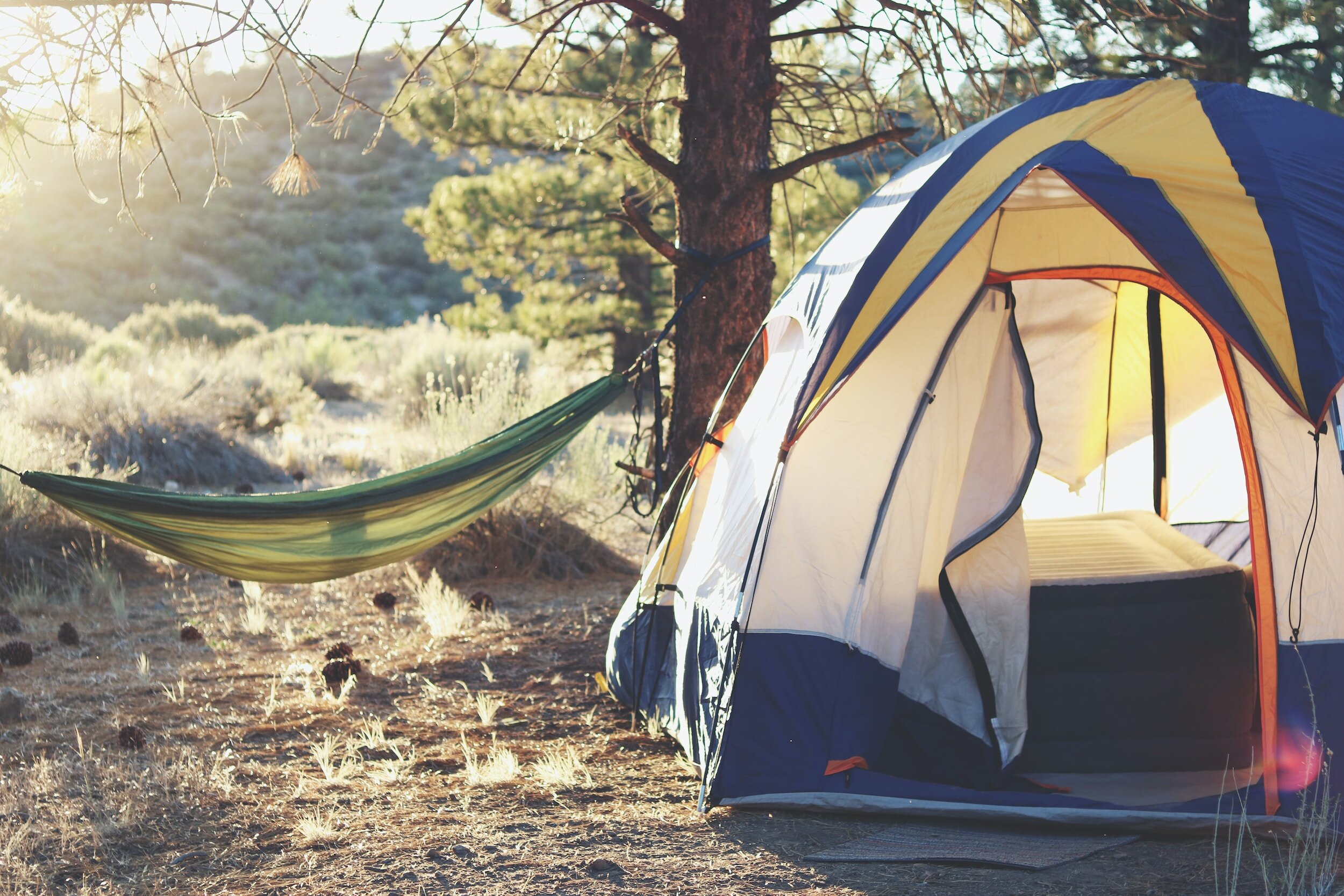
All pricing tiers include access to camping, meals, and classes.
Sliding Scale Pricing Explained

Community Supported - $609
This tier is offered in recognition that our dominant economic system often neglects to provide a living wage to those of us who are most deeply invested in the service of our communities. We want to affirm that we are all in this together and continue to provide accessible quality education offerings to all those who are truly dedicated to the path of mutual upliftment.
Community Sustained - $700
This tier provides a more equitable exchange of financial support for the teachers and organizers of this opportunity, and covers most basic institutional costs of operation of Lost Valley.
Community Regenerative - $800
This tier helps support our staff and teachers, increases total donations to ecological projects, and helps to cover the cost for economically marginalized participants. We are deeply grateful for any additional financial support to help us further our mission and goals!
Book a Dorm Room - $140 (Additional Cost)
Book a private dorm room during your CEW visit. Rooms come with a bed, desk, dresser, bedding, and a towel. There is a shared bathroom and library in the dorm hall.

Application Process
We are now accepting registrations for all of our community experience weeks through the year, or contact bkadmin@lostvalley.org with any questions you might have.
If you need financial assistance, you may enquire about scholarships & work trade opportunities.